Latest News
LATEST NEWS
More than a Melody: The Value of Music in Schools
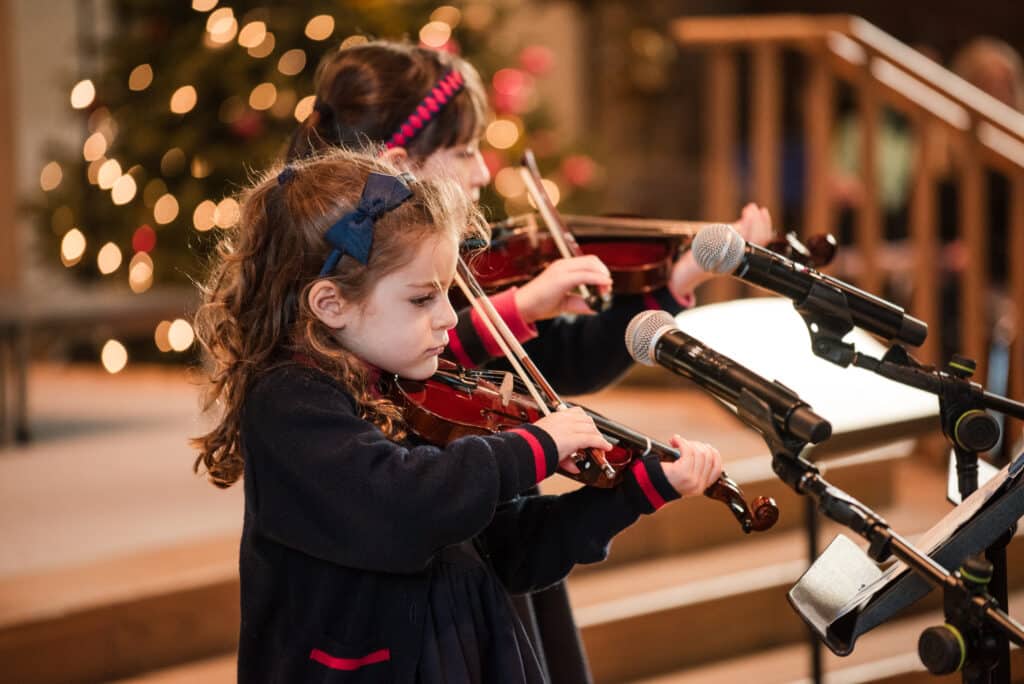
There was one recent event when the power of music in schools hit me more than ever. We brought our academic year to a close in July with a joyous summer concert, the Big Chill. At the end, the entire school – over 400 pupils, staff and families – joined in with a rendition of Earth, Wind and Fire’s ‘September’, complete with a spontaneous conga line. Celebrating Thomas’s Fulham’s 20th anniversary, the sense of community was palpable.
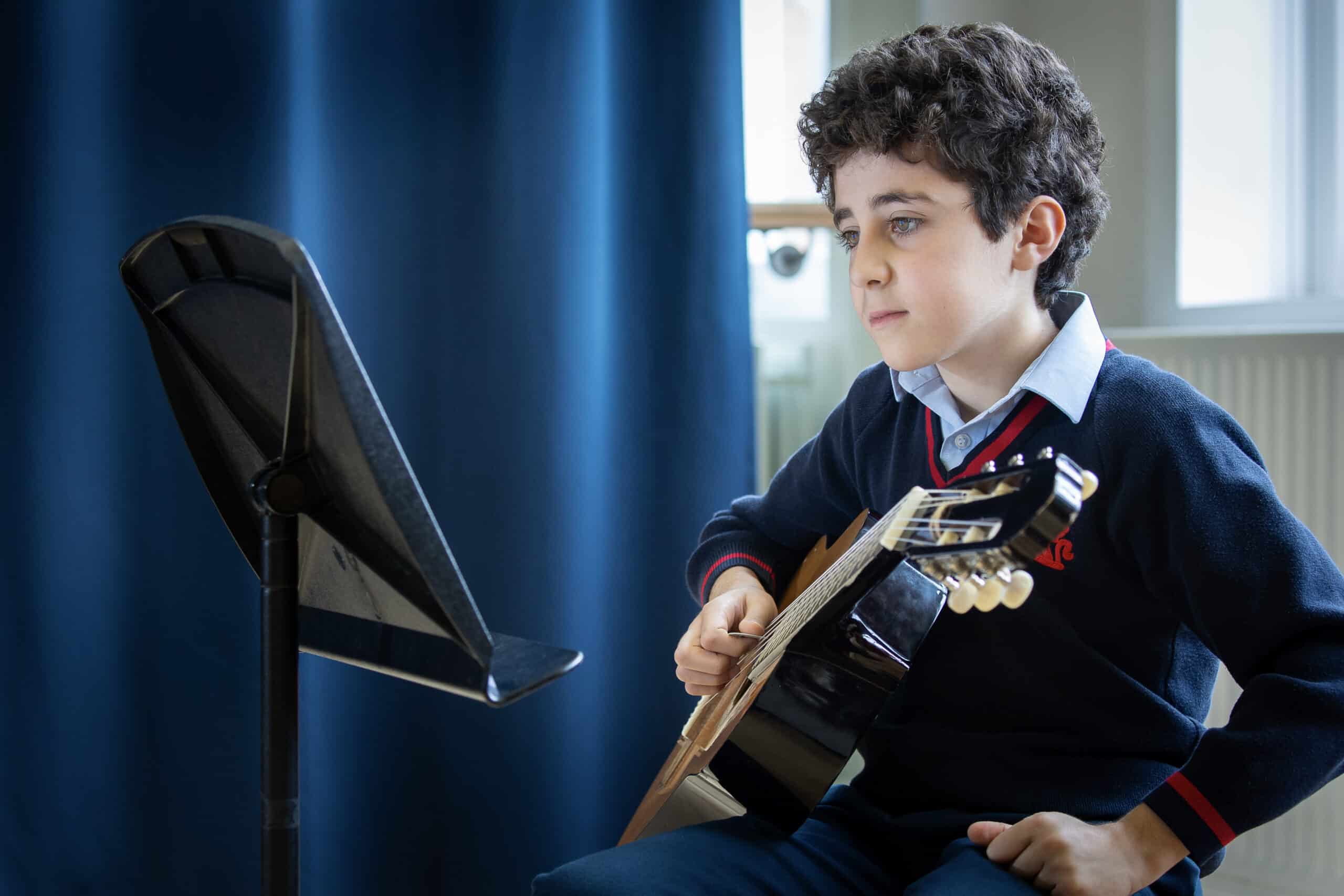
The opportunity to collaborate, to sing and share musicianship with peers and a broader audience brings about a sense of satisfaction, often at the end of a period of rehearsals and practice. We see this time and again in our school communities and when collaborating and performing externally. We should hold dear the treasured joyful moments of belonging that music provides.
The benefits of music learning, alongside other arts, extend far beyond the ability to play an instrument or read sheet music. Research consistently demonstrates its profound effects on brain development and academic performance. It has been linked to enhanced neuroplasticity, inducing transformative changes in the brain throughout a child’s development, and positively impacting cognitive, emotional, physical, and social wellbeing. The intricate processes involved in music acquisition – such as pattern recognition, memory recall, and fine motor skills – lay a strong foundation for learning across all subjects.
Music offers proof of the value of specialist teaching from the earliest days. In primary and prep settings, music learning is multifaceted, including curriculum based, within choirs, ensembles and instrumental learning.
A comprehensive music curriculum, which actively promotes performance, composition, and production, is a powerful tool. It can help us to tackle and transcend many of the social and cultural barriers prevalent in our society. To maximise this impact, we must be broad-minded about the styles of music we introduce to our pupils. Music serves as a key to the door of cultural and societal awareness – an aspect meticulously harnessed within the music curriculum at Thomas’s Fulham by our longstanding Director of Music, Françoise Ogier, her colleague, Hilarie Gordine, and their team.
Beginning units of work with a ‘big’ question enables pupils to think deeply, challenge their understanding and build links in learning. One example of this is ‘who was the greater Mozart?’, during which our Year 4 pupils discover the legacy of female composers against a backdrop of societal expectations and their determination to have their music heard. These include Maria Anna, sister of Wolfgang Amadeus Mozart.
Similarly, ‘where did the Blues come from?’ is answered by Year 5, as they explore the profound impact of spirituals among enslaved people. Pupils learn the musical and historical connections between African American spirituals and Blues music, providing a backdrop for almost all contemporary Western musical styles.
Music is at the heart of our school, and not simply as it is usually the first thing you hear when you arrive at our building due to the position of some of our music rooms. It is a facilitator of the metacognition pillar of our full curriculum. And it is the focus of our celebratory moments and what we turn to in more challenging times.
As the multi-instrumentalist and composer, Stevie Wonder sang in Sir Duke, “music is a world within itself, with a language we all understand.” The sense of joy and community which music fosters should be to the fore in our schools.
Annette Dobson
Head, Thomas’s Fulham